AVAILABLE FOR PRE-ORDER
Releases November 15, 2026
Your past does not have to decide who you become.
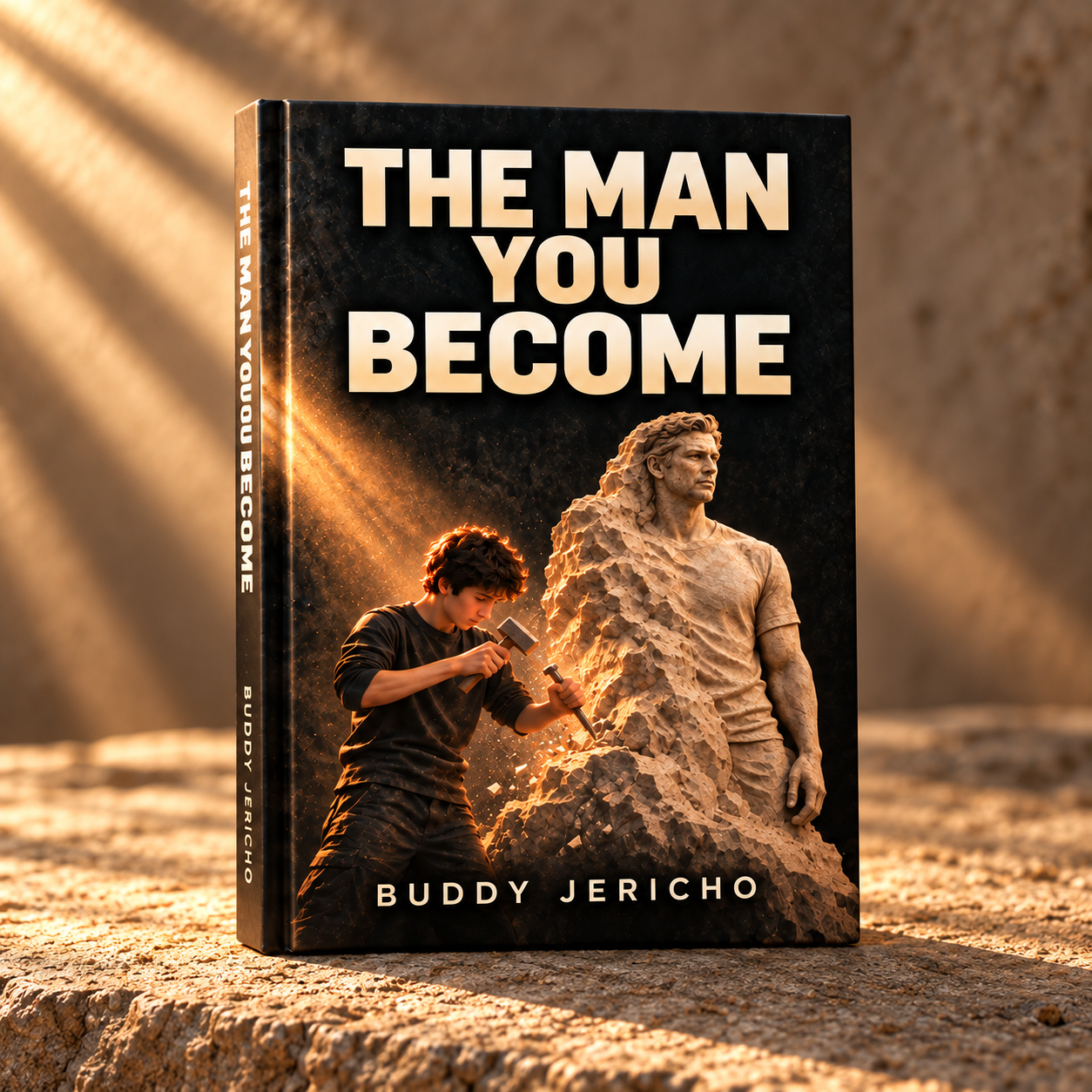
I grew up in Kensington, where toughness earned respect and the future often felt smaller than the neighborhood. The Army opened another path. Combat, intelligence work, building companies, and raising daughters kept teaching me how much I still had to learn.
In The Man You Become, I share the choices, failures, relationships, and faith that shaped me—with practical reflections to help you face your own crossroads.
For young men finding their direction, men starting again, and the people who love and guide them.
What you’ll take from these pages
A way forward after failure
Face what happened, take responsibility, and repair what you can. Learn from your mistakes without letting shame convince you that you’re finished.
Strength you can practice
Keep your word, accept correction, and ask for help. Build character through everyday choices that prepare you for pressure—and make you someone others can count on.
Faith for the unfinished journey
Explore how Christian faith can shape your next step through fear, doubt, and uncertainty. You can keep growing without having your whole life figured out.

THE COMPANION FIELD GUIDE
Put what you read into practice.
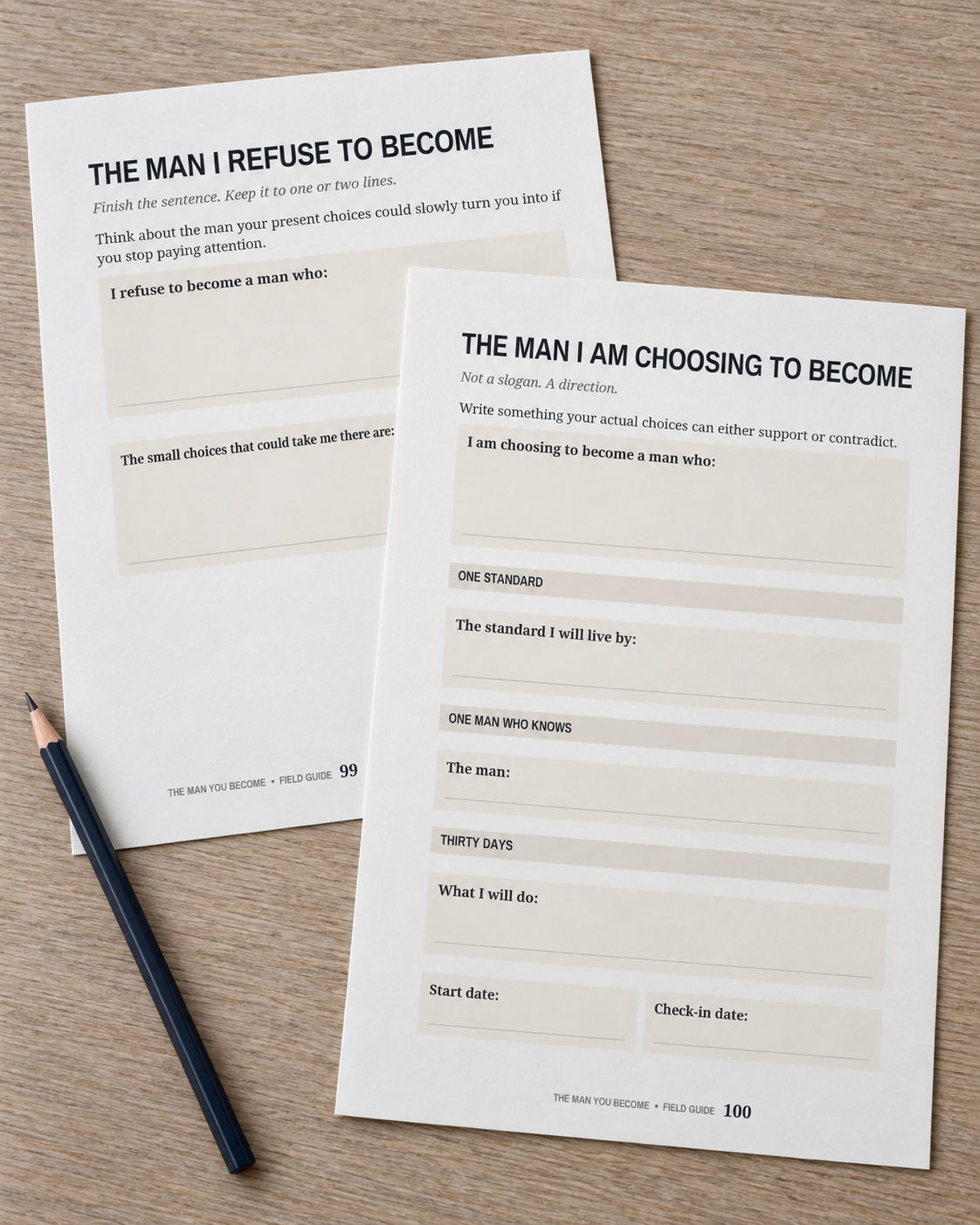
I created the companion Field Guide to help you bring the book’s lessons into your own life.
Across all sixteen chapters, you’ll examine your choices, take practical steps, and check your progress with one man you trust—someone who knows what you committed to do.
Choose one thing. Follow through. Tell the truth about what happened. Then take the next faithful step.
Read it. Tell the truth. Do something with it.
What early readers are saying
“The Man You Become is a must read for young adults
attempting to find stability, structure, and the
opportunity to build a life leading to the long-term
future.”
“This book teaches you how to face fear and keep moving
forward by leaning on your values and your faith...
These pages offer a lot of wisdom, especially for young
men without a positive male role model in their lives.”
“Jericho’s writing is both engaging and deeply
spiritual... he offers readers invaluable mentorship.
This book is an excellent, thought-provoking read.”
SGM Mark C. Vorpahl
United States Army Special Forces (Retired)
Al Buford
U.S. Army Ranger Hall of Fame, 2020
Tom Foy
Deputy Executive Director (Retired), Florida Department of Law Enforcement
“The Man You Become is a must read for young adults attempting to find stability, structure, and the opportunity to build a life leading to the long-term future.”
“This book teaches you how to face fear and keep moving forward by leaning on your values and your faith... These pages offer a lot of wisdom, especially for young men without a positive male role model in their lives.”
“Jericho’s writing is both engaging and deeply spiritual... he offers readers invaluable mentorship. This book is an excellent, thought-provoking read.”
A few words from the book
A few short excerpts from The Man You Become.
Being behind does not mean staying behind
The problem had never been that I could not learn.
I was learning a new language while also learning how to be a student. Once the language began to make sense, the material began to make sense. Once I stopped treating confusion as proof that I did not belong, I could concentrate on what I needed to learn.
I was not stupid.
I was new.
Being new meant I had work to do. It meant accepting that someone else might understand the material faster than I did. It meant asking for help when my pride would rather pretend. It meant struggling in front of other people and returning the next day anyway.
For perhaps the first time in my life, I understood that being behind did not mean I had to stay behind.
—From Chapter Three, “Becoming Small on Purpose”
Learning to understand before judging
The questions were simple: Why does the enemy do what he does? What will he do next?
Answering them was hard.
I needed to understand what he believed, what he feared, who influenced him, and what choices he thought he had. That took research, patient observation, and deep thought. I had to question my first explanation, look for evidence that challenged it, and admit when I had misunderstood. I did not develop that discipline overnight.
I came to measure my effectiveness as an intelligence officer by how well I could understand an adversary’s world and anticipate his next move. I had to learn to see through his eyes without losing my own judgment.
We made mistakes. Some had fatal consequences. I cannot tell the story of getting better without acknowledging that.
That lesson reaches beyond combat. Across a kitchen table, you may be certain that someone’s actions make no sense. Before settling on that judgment, ask what you might be missing. What does he believe is happening? What choices does he think he has? Listen long enough to understand the answer.
You can hold someone responsible for his choices and still make the effort to understand them. Sometimes that understanding is what allows you to help.
—From Chapter Twelve, “From Method to Machine”
The cost of postponing what matters
I sometimes told myself that I would slow down later. When the company became more stable. When the financial pressure eased. When my youngest daughter graduated from high school.
There was always another point in the future when being present would become easier.
But fatherhood does not allow you to store time for later.
My daughters needed security and opportunity. They also needed their father to hear them the first time.
Neither responsibility cancelled the other. Providing for my family did not excuse being absent from them. Being present did not remove my responsibility to provide.
I had to learn to carry both.
I am still learning.
I still become distracted. My daughters still catch me. I still have to apologize, put the problem aside, and return to the conversation.
The difference is that I no longer want to call postponement a plan.
—From Chapter Fifteen, “Choosing the Man You Will Become”
Faith while you are still becoming
He was willing to step forward, but willingness did not make him wise overnight. He could be courageous in one moment and frightened in the next. He made promises his courage could not yet support. He spoke when he should have listened. He failed publicly and had to face the truth about himself.
But he kept following.
Jesus did not wait for Peter to become a finished man before calling him.
He called Peter and then began forming him.
—On Peter, from Chapter Sixteen, “Why the Apostles Matter”
Your past does not get the final word.
The Man You Become is about the choices, failures, responsibilities, relationships, and faith that shape who we become—and the fact that none of us has to remain the man we were yesterday.